
Why Seoul’s Unification Ministry is Going Rogue
While open warfare between Seoul’s ministries suggests policy paralysis, the deeper reality is that President Lee is prioritizing market stability and the US alliance over his party’s ideological nostalgia; expect the “Alliance First” status quo to hold despite the noise.
An unrelated personal note: In general, I am a man of good health, but I do suffer occasionally from sleeplessness. The culprit is usually a spike in caffeine late in the afternoon, or perhaps an exciting conversation fueled by drinks over dinner. Yet, every so often, I find myself lying awake for no apparent reason.
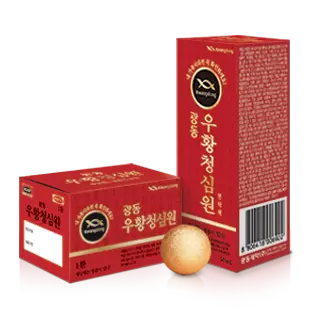
While not a chronic issue, as a creature of habit, I wanted to find a solution. I recalled an expat acquaintance who once lauded cheongshimhwan청심환—a traditional Korean herbal calming pill—as a gentle alternative to sleeping aids.
It is widely considered to be non-habit forming, unlike many prescription sleep medications (though it is still not recommended for daily, long-term use). I picked some up over the counter, and it worked wonders, helping me drift off by simply settling my racing heart. For the occasional insomniac among you, it might be worth a try. (Naturally, this is an anecdote, not medical advice).
As always, my inbox is open. Whether you have a query, a critique, or just a quick thought, please don’t hesitate to reach out: it’s subin at koreakontext.com
—Subin
Why Seoul’s Unification Ministry is Going Rogue
Internal friction is a feature, not a bug, of any administration. As officials navigate competing policy options and personnel decisions, a degree of creative tension helps shape the path forward.
That is, as long as it stays below the surface.
Once it spills into broad daylight, however, infighting transforms from a creative process into a liability. A president must typically do whatever it takes to quell public discord, lest their authority be called into question. Even when leaks occur, they usually involve minor factions vying for the president’s ear—rarely open warfare between major ministries.
Yet, this is exactly what we are witnessing: one ministry openly defying another’s jurisdiction. And this in an administration barely six months out of the cradle.
The Return of the Turf War
The Ministry of Unification (MOU) has announced it will not participate in a newly launched, regular ROK-US consultation on North Korea policy led by the Ministry of Foreign Affairs (MOFA). The MOU conspicuously skipped the inaugural meeting on December 16.
Instead, the unification ministry declared it would consult Washington directly regarding inter-Korean dialogue and cooperation “when needed.”
We have effectively returned to the long-running turf war that haunts every Minjoo administration: the “Alliance First” camp versus the “Autonomy” camp.
Minjoo politicians, many of whom harbor a nostalgic view of inter-Korean relations, have long viewed career diplomats at MOFA with deep suspicion. They see the foreign service as an obstacle—bureaucrats hiding behind international sanctions to block inter-Korean progress.
Some go further, believing career diplomats are too “pro-US”—to the point of compromising South Korea’s national interest. I have learned from private conversations that the Moon administration grew so suspicious of the diplomatic cables drafted by MOFA that, at one point, the Blue House demanded diplomats simply record meetings with foreign counterparts and submit raw transcripts. They apparently feared the official cables would be “contaminated” by pro-American bias.
A joint statement by former unification ministers—all veterans of Minjoo administrations—reveals the depth of this distrust:
“Throughout the history of inter-Korean relations—whether it was the establishment of the Kaesong Industrial Complex or the consideration of sanctions relief—the Ministry of Foreign Affairs has been far more negative and conservative than even the US government. We cannot entrust North Korea policy to a ministry that lacks both the expertise and a fundamental understanding of inter-Korean relations.”
The Sam Altman Playbook
Since this feud is now public, the President must mend the rupture. But where does President Lee actually stand? This is where the confusion deepens.
A typical Minjoo president would throw their weight behind the autonomy camp. Better yet, they would have prevented the dispute entirely by appointing a loyal “autonomy” advocate as National Security Advisor (NSA). In the Korean presidential system, proximity to the leader trumps all.
Yet President Lee’s pick for NSA was Wi Sung-lac, a retired career diplomat widely considered a pillar of the “Alliance First” school.
Initially, I suspected Mr Wi’s appointment was a smokescreen—or perhaps a byproduct of the bad blood between the current and former presidents. It is an open secret that Messrs Moon and Lee share a mutual disdain, and the Lee administration has taken great pains to avoid appointing anyone who served in the Moon Blue House.
Adding to the confusion is Mr Lee’s own rhetoric. Since taking office, he has sounded deeply sympathetic to Pyongyang. Yet, his key foreign policy decisions have hewed closer to his conservative predecessor than to a traditional Minjoo leader.
When words and actions diverge, which should you trust?
I have come to believe President Lee’s foreign policy is far removed from the Minjoo archetype. His rhetoric is merely lip service for the traditional base.
Jeong Se-hyun, the most radical of the former Minjoo unification ministers, recently lashed out at Lee’s foreign policy team for “dragging down” the President.
But can you really be “dragged down” by people you refuse to fire?
As I have noted before, Mr Lee is not a man of ideology. He is a creature of opportunity.
Foreign observers often ask me if the Minjoo administration will veer off the standard diplomatic course to force a breakthrough with the North. After six months of observation, I am confident the Lee administration will stay the course.
There are two reasons for this. First, Mr Lee’s pragmatism—or opportunism—means external variables weigh heavier than internal ideology. He is effectively playing Sam Altman: saying the right things to please the room, while doing exactly what he intended all along.
Second, the Minjoo support bloc has become the establishment. They cannot afford to cross the market. The fracturing global economy offers Seoul little leeway to go maverick. The Gen-86 has migrated from the barricades to the boardroom, and a significant portion of their wealth is now tied up in the stock market. They would not appreciate their asset values nosediving for the sake of ideology.
To be sure, given his opportunistic nature, President Lee could pivot the moment the situation becomes politically exploitable. For instance, if President Trump fancies another photo-op with Kim Jong Un.
The former unification ministers believe that both Trump and Lee will embrace Kim as soon as they free themselves from the “deep state” old guard. They mistake these two leaders for men of conviction—one of their own.
However, Messrs Trump and Lee have few convictions in life, other than the ones handed down by a criminal court. They are men of opportunity. I doubt Mr Trump sees much upside in a reunion with Mr Kim, who is still smarting from the humiliation of Hanoi.
Furthermore, Pyongyang has shown zero interest in playing along. Mr Kim’s recent condemnation of Seoul’s nuclear-powered submarine project was the final nail in the coffin. Mr Lee could have blamed his predecessor for bad relations, but his own biggest foreign policy achievement—the submarine program—is now the target of North Korean ire.
Thus, we can assume the Lee administration will stick to the Altman playbook: talk a big game about peace while steering clear of the old boys’ dreams of autonomy.
The Renegade Mentor
This leaves one question: Why is President Lee letting the unification ministry go rogue?
We must consider the personal history between President Lee and Chung Dong-young, the Minister of Unification. Mr Lee led Mr Chung’s political support coalition early in his career and worked on Mr Chung’s 2007 presidential campaign.
A helpful comparison is the dynamic between George W. Bush and Dick Cheney prior to the invasion of Iraq. Mr Cheney was a mentor figure to Mr Bush, a status that allowed him to bypass the State Department and press his own agenda.
We know how that story ended. After the Iraq debacle, Mr Cheney lost his grip on foreign policy.
What, then, will be Mr Chung’s “Iraq moment”? He is itching to speak to Pyongyang. As I wrote previously, he sought to open back channels months before he was even appointed.
As his impatience grows, he risks crossing a red line. This could take the form of a UN sanctions violation or a direct rebuff from Washington. His recent briefing to the President touted North Korean tourism as a breakthrough card—a plan that relies heavily on evading the current sanctions regime.
I am quite certain that when the time comes, President Lee will not hesitate to fire his mentor.